Bancroft, Ontario & Hudson’s Hope, British Colombia
By Maryanne — a short, personal reflection.
Sunday October 2nd/ 2025
Hi! My name is Maryanne. I’ve always felt a strong connection to the outdoors, whether it was exploring little trails near home or spending summers away with family. Over the years, different places across Canada have become really meaningful to me. When I think about who I’ve become, two places stand out above all the rest: Bancroft, Ontario and Hudson’s Hope, British Columbia. They’re very different with one being a rocky, cottage-filled town in Ontario and the other being a northern community on the Peace River. However, both hold pieces of me. Both carry personal significance, but they are also deeply tied to the histories, treaties, and communities of Indigenous Nations. By sharing my experiences alongside what l have learned about the Indigenous presence in these regions, I hope to acknowledge the lands l have benefited from and show appreciation for their ongoing importance.
Background Knowledge
Before diving into the two places, I think it’s important to pause and talk about treaties and unceded lands in Canada. Treaties were formal agreements made between the Crown and Indigenous Nations, beginning after the Royal Proclamation of 1763. They were meant to establish peaceful relationships and set out to fairly share the land and resources. In reality, many treaties were unfair, vaguely written, or not honoured by settlers and governments (Miller, 2009).
Some parts of Canada are covered by historic treaties (like Treaty 8 in British Columbia and Alberta), while others remain unceded which means Indigenous Nations never signed treaties and never surrendered their lands. Unceded doesn’t mean uninhabited but instead means sovereignty and stewardship remain with Indigenous Nations (Borrows, 2016).
Two key contexts matter for my places:
• Treaty 8: Signed in 1899, covering over 840,000 km² across northern Alberta, Saskatchewan, British Columbia, and the Northwest Territories. It promised Indigenous Nations the right to continue hunting, fishing, and trapping “for as long as the sun shines, the rivers flow, and the grass grows” (Mair, 1900/1999).
• Algonquin Land Claim: In Ontario, the Algonquin Nation is currently negotiating one of the largest modern land claims in Canada, covering 36,000 km² of unceded territory in the Ottawa Valley, including Bancroft (Government of Ontario, 2021).
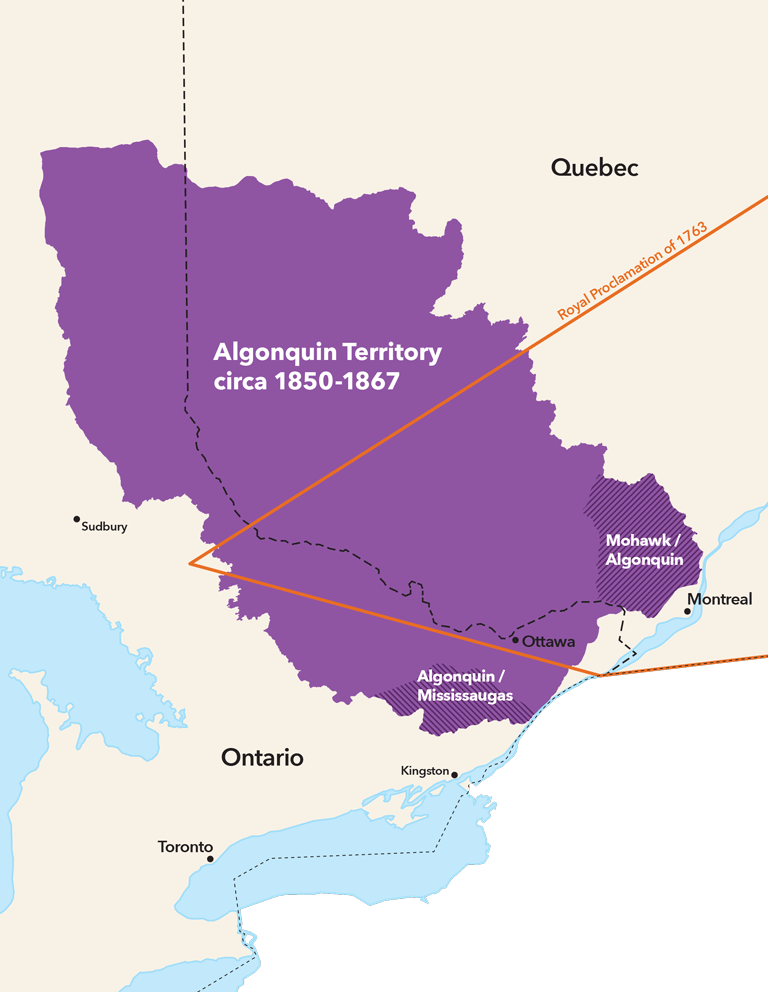
Figure 1. Map of Algonquin territory (The Canadian Encyclopedia, 2020).
Read more about historic treaties here
Bancroft, Ontario
My Connection
My family has always been big fans of camping, and during COVID we decided to buy a cottage in Bancroft. At first, I thought it was just about escaping isolation, but over time it became so much more. I made lifelong friends there, and summers at the cottage gave me a sense of peace and belonging during a time when the world felt upside down. When I think about Bancroft, I think about campfires, late-night swims, and the comfort of a place that always felt like a retreat.
Indigenous Presence
The Bancroft area is part of the traditional territory of the Algonquin people, who have lived here for over 11,000 years (Grainger, 2019). Archaeological evidence shows ancient campsites, tools, and portage routes across the region. The waterways and forests that I now see as places of leisure were once vital travel corridors, hunting grounds, and gathering places.
European settlement began in the mid-1800s, with industries like lumbering, farming, and later mining (Britannica, n.d.). These disrupted Algonquin lifeways and reduced access to traditional land. Despite this, Algonquin presence remains strong today. The Algonquins of Pikwakanagan First Nation and the Algonquins of Ontario continue to work toward cultural revitalization, language programs, and land stewardship (Algonquins of Ontario, 2023). Local places like Eagle’s Nest Park in Bancroft even include interpretive signs sharing Algonquin stories and history.
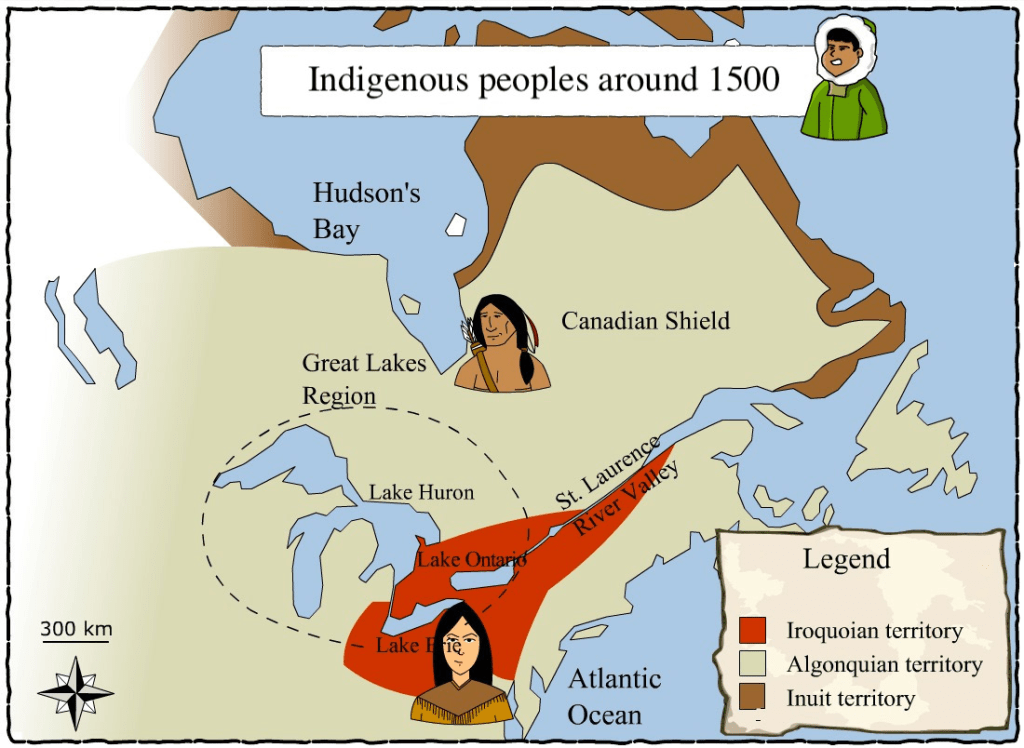
Figure 2. Historical map of Algonquian peoples’ territories, ca. 1500 (Societies and Territories, 2021).
Treaty & Territory
Bancroft sits on unceded Algonquin territory. This means no treaty was signed to give up the land, and sovereignty was never surrendered. Today, the Algonquins are involved in a major land claim negotiation with Ontario and Canada, which could impact conservation, governance, and development across 36,000 km² of land (Government of Ontario, 2021). For me, learning this has shifted how I think about our cottage because it isn’t just a family escape it is also part of an ongoing story of Indigenous resilience and rights.
Learn more about the Algonquin land claim
Indigenous Organization
One Indigenous-led organization connected to this region is the Algonquins of Ontario (AOO). They represent Algonquin communities in land claim negotiations and provide resources on history, culture, and Indigenous rights. Their work helps ensure Algonquin voices are central to decisions about the land.
Hudson’s Hope, British Columbia
My Connection
Hudson’s Hope has always been tied to my grandparents. They live off the grid: gardening, raising chickens, hunting their own food, and avoiding most technology. This is where I learned to hunt, where I spent long days preparing meals and baking sweets with my grandma, and where I built bonds that will last a lifetime. The land there feels powerful with mountains, rivers, and endless forest. Being in Hudson’s Hope has shaped me into someone who values independence, hard work, and a deep respect for the outdoors.
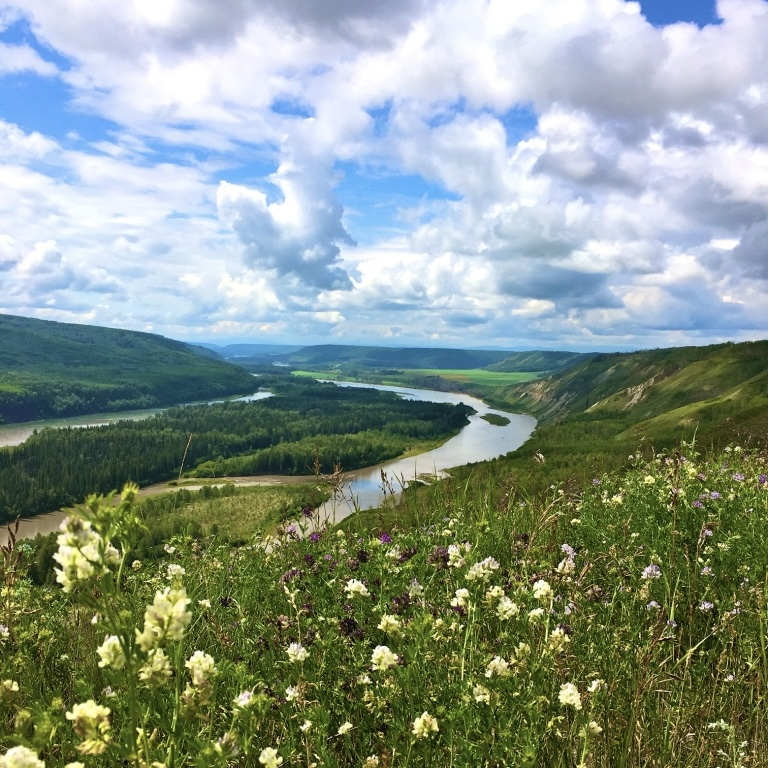
Figure 3. Peace River valley near Hudson’s Hope, before Site C Dam (First Peoples’ Cultural Council, 2019).
Indigenous Presence
The Hudson’s Hope region is home to Dane-zaa (Beaver), Cree, Saulteau, and West Moberly First Nations, who have lived in the Peace River Valley since time immemorial (West Moberly First Nations, 2022). For these Nations, the land is more than scenery because it is central to hunting, fishing, gathering plants, and carrying out ceremonies. Stories passed through generations describe sacred places like islands in the Peace River where young people went on vision quests (The Narwhal, 2020).
Treaty & Territory
This area is covered by Treaty 8, signed in 1899, with adhesions in British Columbia in 1914. The treaty promised that Indigenous peoples could continue their traditional ways of life “for as long as the sun shines, the rivers flow, and the grass grows” (Mair, 1900/1999). But those promises were undermined as hydroelectric projects transformed the land.
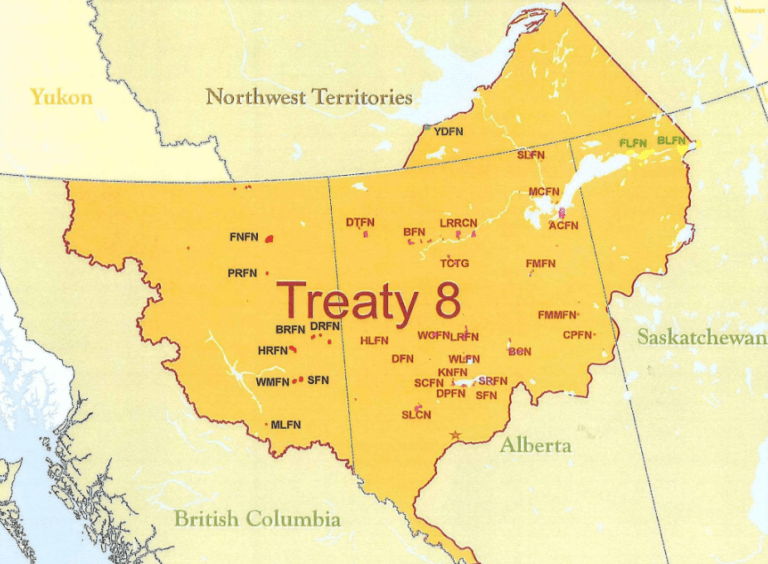
Figure 4. Map of Treaty 8 territory in Canada (Treaty 8 First Nations Organisation, n.d.)
Dam Impacts & Displacement
In 1967, the W.A.C. Bennett Dam created Williston Lake, flooding thousands of hectares and displacing Indigenous communities (Indigenous Health NH, 2015). Fishing grounds were poisoned with mercury, burial sites were submerged, and caribou and moose habitats were destroyed. More recently, the proposed Site C Dam threatens to flood another 5,500 hectares of Peace River valley, including vision quest sites, moose-calving islands, and medicinal plant areas (The Narwhal, 2020). For Nations like West Moberly, these losses are not just environmental because to them they are cultural erasures.
Read more about the Site C Dam here
Indigenous Organization
One Indigenous-led initiative here is the Caribou Recovery Partnership, co-led by West Moberly and Saulteau First Nations. It combines traditional knowledge with science to restore caribou populations devastated by industrial development. This work is about more than wildlife, it’s about protecting ways of life promised under Treaty 8.
Reflections
When I think about Bancroft, I remember laughter around campfires and the relief of having a safe place during COVID. When I think about Hudson’s Hope, I remember the smell of fresh bread baking with my grandma and the quiet lessons of hunting with my grandpa. These places shaped my identity.
But now I see them differently too. My joy in these places came without the fear of losing them. For Indigenous peoples, these lands carry stories of displacement, loss, and resilience. Knowing this history makes me feel a responsibility to acknowledge where I am, to learn, and to support Indigenous voices in land stewardship.
References
Algonquins of Ontario. (2023). Who we are. https://www.tanakiwin.com/
Borrows, J. (2016). Freedom and Indigenous constitutionalism. University of Toronto Press.
Encyclopaedia Britannica. (n.d.). Bancroft, Ontario. In Encyclopaedia Britannica. https://www.britannica.com/place/Bancroft-Ontario
Government of Ontario. (2021, August 20). The Algonquin land claim. https://www.ontario.ca/page/algonquin-land-claim
Grainger, R. (2019). An Algonquin story. Grail Springs. https://www.grailsprings.com/an-algonquin-story
Indigenous Health NH. (2015). Treaty 8 First Nations of Northern Health Area: Health and healing strategy. https://www.indigenoushealthnh.ca/
Mair, C. (1999). Through the Mackenzie Basin. University of Calgary Press. (Original work published 1900)
Miller, J. R. (2009). Compact, contract, covenant: Aboriginal treaty-making in Canada. University of Toronto Press.
The Narwhal. (2020, July 20). ‘I don’t see why anything should be secret’: First Nation rejected $28 million in Site C dam deal. The Narwhal. https://thenarwhal.ca/i-dont-see-why-anything-should-be-secret-first-nation-rejected-28-million-in-site-c-dam-deal-court-docs-reveal/
West Moberly First Nations. (2022). Our history. https://westmo.org/
 The Two Places That Shaped me
Leave a comment